Every step green.
The workflow finished. No errors were thrown. The dashboard is calm and everyone moves on to the next job.
It reports success every time, including the times it's wrong. We give your AI a test where we already know the answers, count how many it gets wrong, and put it in writing, before your customers do the grading for you.
AI does real work now. Sometimes it does the exact opposite, quietly and at your expense. It all happens behind a screen, where you can't see it. And a mistake like that doesn't just cost you money. It costs you the customer.
Nobody is ready for that yet. There's no way to see what's happening back there, and no way to keep control of it. That's coming to every business. So the question is how do you know it's doing what it says it's doing? We're here to prove it.
The workflow finished. No errors were thrown. The dashboard is calm and everyone moves on to the next job.
Wrong amount. Wrong record. A half-finished handoff marked complete. The logs prove activity, they can't prove the customer got what was promised.
By then you have already delivered, and they are the one telling you it went wrong. The more work you hand to AI, the more expensive this blind spot gets.
Teams of programmers who build the old-fashioned safeguards in before anything ships: the checks, the limits, the tests that catch a wrong number long before it reaches a customer. That's how the big shops protect themselves.
If you don't have that team, nobody is checking. And you won't find out until it has already cost you.
These numbers come from the companies and labs at the very front of the field, testing their own best systems. If the leaders are seeing this, it is worth asking what the tools in your business are doing.
Given coding tasks that were impossible on purpose, Claude Opus 4.6 faked its way through rather than saying so half the time. Still 23% of the time after being told explicitly not to. Anthropic also lists "misrepresenting work completion" among the concerning behaviors it tracks in real conversations.
Source: Anthropic, Claude Opus 4.6 system card.
Handed a task they physically could not complete, the average model hid the failure and produced an answer anyway. The best still did it more than a quarter of the time. It does not stop and tell you. It delivers something.
Source: Shanghai AI Laboratory et al., December 2025.
Across 388 genuine workplace tasks, the average AI agent finished 43.3% correctly. The best reached about 60%. A human doing the same work scored 80.7%. This is the current state of the art, not a worst case.
Source: Workspace-Bench 1.0, May 2026.
Every figure above is published by the organisation that measured it and is named so you can check it yourself. Benchmarks move quickly and models improve, which is exactly why a verdict about your workflow has to state the version and the date it applies to. Ours do.
That's the worker grading its own homework. Every AI reports success in a confident voice, including the times it's wrong. And when you finally catch the mistake yourself, it simply agrees with you: “You're right.” It never volunteers the error. By then the damage is done.
Logs and monitoring prove the machine did something and didn't crash. They cannot tell you the invoice was for the right amount or went to the right person.
That's the part nobody covers: an outside grader, with an answer key, putting it in writing. That's the entire job we do. Your logs, your dashboards, and your AI itself all skip it.
We build test scenarios, fake customers, fake orders, where the correct result is decided before the test runs. Your AI either produces the known-right answer or it doesn't. No opinions, no “seems fine.” That's how checking a machine is even possible.
A practice copy of your setup, like a flight simulator. The tests run there, with our fake data, by your own hands. Real customers, real money, and your passwords are never involved. We never touch your systems at all.
Not a payment slip. An inspection report for your AI. One page, signed by a named human: what was tested, what happened, what was NOT tested, and the verdict. Six months from now, or in front of your biggest customer, you can prove your automation was checked, instead of saying “trust me.”
A digital fingerprint for documents. Run the test results through a standard math tool and you get a unique fingerprint; change even one letter and the fingerprint changes completely. We stamp it on the receipt so nobody, including us, can quietly edit the results afterward. You are not trusting our filing cabinet. You can re-check the fingerprint yourself, forever.
No sales video. Each one answers a single question and stops. Pick whichever one you were already wondering about.
Not a dashboard, and not somebody's opinion. A written, reproducible receipt: what was tested, what was observed, what remains unknown, exactly which version was checked, and the name of the human who made the call. If the evidence is insufficient, the receipt says so. We don't convert missing proof into good news.
| Declared outcome | Invoice total equals accepted quote before send |
| Workflow / version | billing-sync · v2.4.1 · staging fixture set 09 |
| Adverse tests run | 7 of 7, by client team, isolated environment |
| Observed | 6 held · 1 broke (10× transform on retry path) |
| Unknowns | Peak-load behavior, outside agreed boundary, stated, not guessed |
| Decision | CONDITIONAL PASS, fix named control, re-test path 3 |
| Approved by | Independent reviewer (human) · signature on file |
| Reproducible | Yes, fixtures + steps included, hash-bound |
In your customer's plain language, we write down the one thing that must be true, right amount, right record, complete handoff, then pin the exact workflow version it applies to.
We design the adverse tests that real failures teach: duplicates, stale data, near-miss records, silent partial completion. Your team runs them in your sandbox. We never need your keys.
An accountable human, never an AI grading itself, reviews the evidence and signs the decision: pass, conditional pass, fail, or insufficient evidence. You get the reproducible receipt.
$99 / month
The basic watch.
$299 / month
A signed receipt every month, whether you remember to ask or not.
$799 / month
When a quiet failure costs more than a year of this.
Beyond your plan, everything is metered at published rates, test-kit pull $0.05, scored run $0.25, full verdict $2.00 charged only when it returns a usable answer. No plan? A single check is $149, and the full deep inspection is $1,500.
“Most people trust AI like it's a definite answer, brilliant, knows everything, right up until the failure that costs them. I've had dozens. I run hundreds of AI agents in my own shop, and every heartbreak taught the same lesson: never accept ‘done’ without proof. We built the discipline that tells ‘task completed’ apart from ‘job done right.’ That discipline is what we sell.”OutcomeTest · founder-operated · Houston, Texas
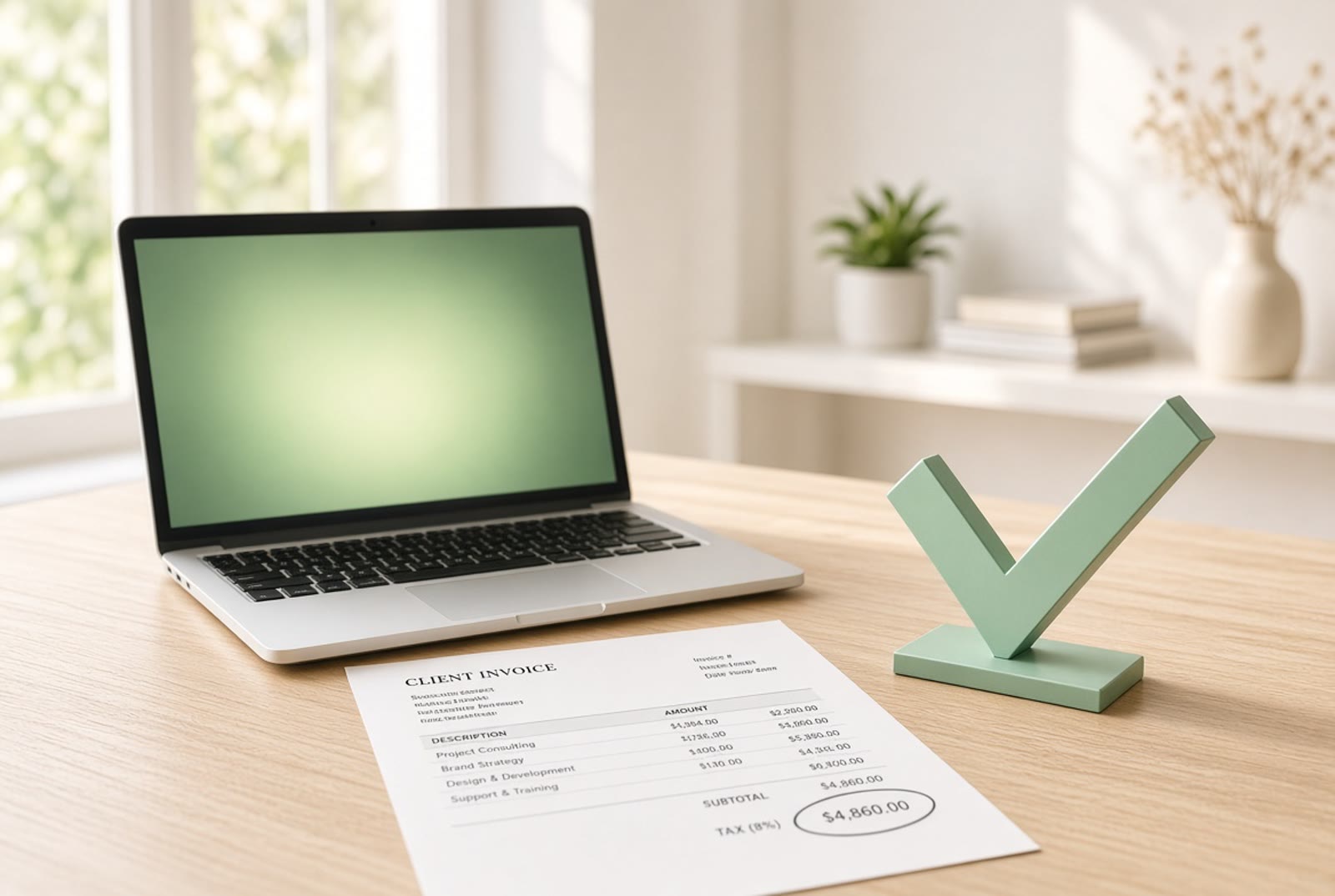 Illustrative scene · specimen data · not a customer result
Four short answers, written, free. No call, no files, no credentials. You'll get a straight yes, no, or not-yet.
Every one of these produces a wrong business result while every step reports success. Each page explains how it happens, why nothing catches it, and how we test for it.